The World's Two Most Important EV Makers
In 2024, BYD and Tesla together accounted for over 40% of all battery electric vehicles sold globally. They represent two distinct philosophies: Tesla's pursuit of performance, software, and fast-charging infrastructure; BYD's mastery of vertically integrated manufacturing, chemistry innovation, and aggressive cost reduction.
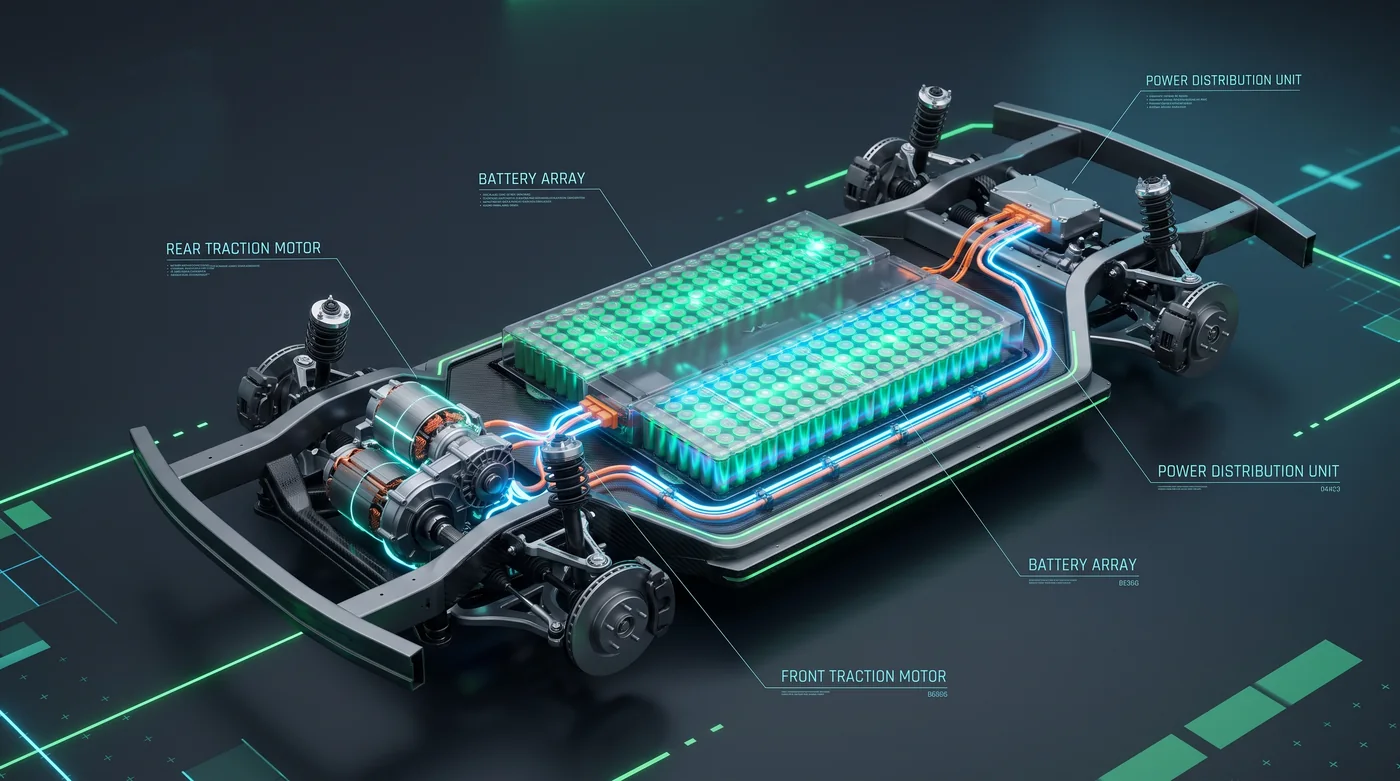
At the heart of the debate is battery technology. BYD uses its proprietary Blade Battery with LFP chemistry. Tesla uses NMC cells from Panasonic, CATL or LG depending on the model and market. Both are excellent batteries — but in very different ways.
Models compared: BYD Seal AWD (82.5 kWh Blade LFP) vs Tesla Model 3 Long Range AWD (82 kWh NMC). Both premium D-segment sedans at similar price points in most markets.
Full Spec Comparison
| Specification | BYD Seal AWD | Tesla Model 3 LR AWD |
|---|---|---|
| Battery capacity | 82.5 kWh | 82 kWh |
| Chemistry | LFP (Blade) | NMC |
| WLTP range | 570 km ✓ | 554 km |
| City consumption | 14.0 kWh/100km ✓ | 15.2 kWh/100km |
| Highway consumption | 17.4 kWh/100km | 17.0 kWh/100km ✓ |
| Peak DC charge | 150 kW | 250 kW ✓ |
| AC charge | 11 kW | 11 kW |
| 0–100 km/h | 3.8 sec | 3.1 sec ✓ |
| Pack voltage | 400V | 400V |
| Cycle life estimate | 2,000+ cycles ✓ | ~800–1,200 cycles |
| Winter performance | Good | Very good ✓ |
| Charge to 100%? | Yes, daily ✓ | Recommended: 80% |
| Thermal runaway risk | Very low ✓ | Low |
Range: BYD Wins, Narrowly
The BYD Seal's 570 km WLTP range edges out the Model 3 LR's 554 km — a 2.9% advantage. In city driving, BYD's advantage grows to around 8% thanks to better low-speed efficiency. On the highway at sustained speeds above 120 km/h, the gap narrows and the Tesla can match or slightly edge ahead.
The practical difference in daily use is negligible. Both vehicles can comfortably handle 400 km real-world trips before needing a charge.
Charging Speed: Tesla Wins Decisively
This is where Tesla's advantage is most meaningful. The Model 3 peaks at 250 kW on a Supercharger — the fastest charging available in this segment. The BYD Seal tops out at 150 kW. In practical terms, a 20→80% charge takes approximately 18 minutes in the Tesla and around 28 minutes in the BYD.
On a road trip, that 10-minute difference per charge stop adds up. If you charge three times on a long journey, the Tesla saves you 30 minutes. Tesla's Supercharger network reliability is also a genuine advantage — BYD relies on third-party networks which vary in quality by region.
Battery Longevity: BYD's Biggest Win
LFP chemistry in the BYD Blade battery is capable of 2,000–3,000 charge cycles before reaching 80% capacity. The NMC in the Tesla reaches that threshold at roughly 800–1,200 cycles. Over a decade of daily charging, this difference compounds significantly.
Additionally, LFP can be routinely charged to 100% without accelerating degradation. Tesla recommends keeping NMC to 80% for daily use. This means the BYD's usable range is effectively its full rated range, while Tesla owners should mentally subtract 20% for daily driving.
Safety: LFP's Inherent Advantage
BYD's Blade Battery has been the subject of high-profile nail penetration tests — a notoriously aggressive abuse test. The Blade cells passed without catching fire. NMC cells are more prone to thermal runaway under extreme conditions, though Tesla's battery management system and thermal design mitigate this significantly. Both vehicles are extremely safe — but the chemistry-level advantage belongs to LFP.
The Verdict: It Depends What You Prioritise
There is no single winner. Choose BYD if you prioritise longevity, plan to keep the car 8+ years, want to charge to 100% daily without anxiety, do mostly city and suburban driving, and value lower long-term running costs. Choose Tesla if you regularly drive long distances and need the fastest charging stops, live in a cold climate, prioritise acceleration, or rely on a consistent fast-charging network.
Both are exceptional vehicles. The right choice depends on how you actually drive — not which brand has the better marketing.