The headline numbers are getting extreme
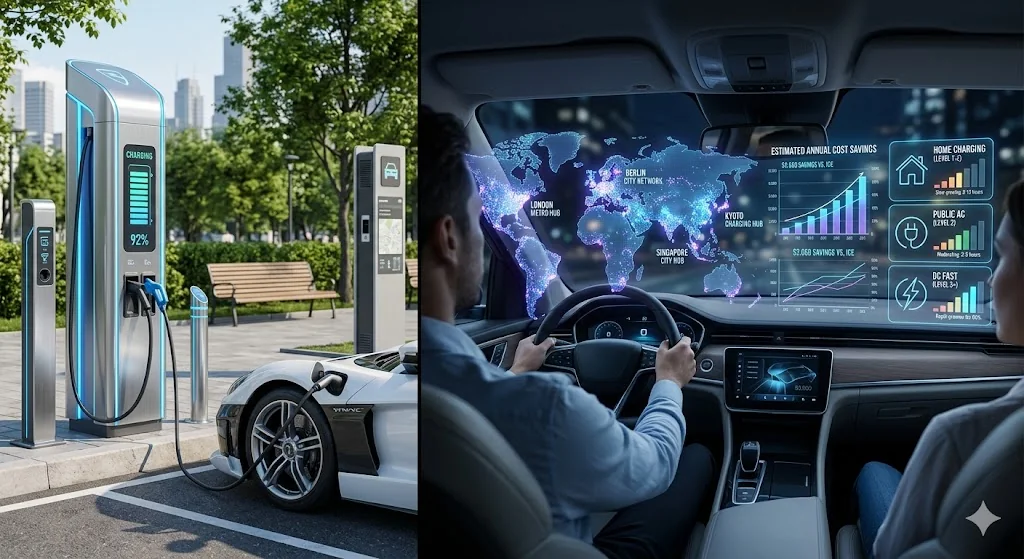
Public charging has changed dramatically in a few years. The IEA reports that the number of fast and ultra-fast chargers grew from about 1.5 million in 2024 to 2.2 million in 2025. At the same time, manufacturers such as BYD are promoting charging systems with theoretical power levels far beyond the 150–350 kW range that drivers have become familiar with.
But a 1,000 kW charger does not automatically mean a car will charge at 1,000 kW. The vehicle, battery, connector, station and thermal-management system all have to support the power.
Peak power is not the same as charging time
Charging power is only one part of the equation. What matters to the driver is the energy added during the charging stop. A vehicle might briefly reach a very high peak and then reduce power sharply as the battery fills.
That is why charging curves are more informative than a single maximum-kW number. For road-trip planning, the useful questions are: how quickly does the car reach its peak, how long does it hold it, and how much range is added between roughly 10% and 80%?
Why 800V architecture helps
For the same electrical power, a higher system voltage can reduce the current required. Lower current can reduce losses and help manage cable, connector and thermal constraints.
That is one reason 800V architectures have become a major theme in premium and performance EVs. Hyundai’s IONIQ 6 N, for example, uses an 800V system and is rated for 10–80% charging in 18 minutes at suitable 350 kW infrastructure.
The grid becomes the next bottleneck
Ultra-fast charging does not happen in isolation. A large charging site can require a substantial electrical connection, power electronics, cooling equipment and sometimes on-site energy storage.
The IEA notes that Europe had about 20% growth in public charging points in 2025, while the EU is also pushing high-power infrastructure along major corridors. The next phase is therefore as much about grid planning as it is about vehicle engineering.
Will ultra-fast charging eliminate range anxiety?
It can reduce it, but it will not eliminate every problem. A car that adds several hundred kilometres in 10–15 minutes can make long trips feel much closer to petrol-car refuelling. However, the experience depends on charger availability, battery temperature, traffic at the site, the vehicle’s charging curve and the price of electricity.
The better metric: stop asking “How many kW?” and start asking “How many kilometres can this EV add in 10 minutes under realistic conditions?”
That is the metric VoltEV will increasingly emphasize as charging technology develops.